
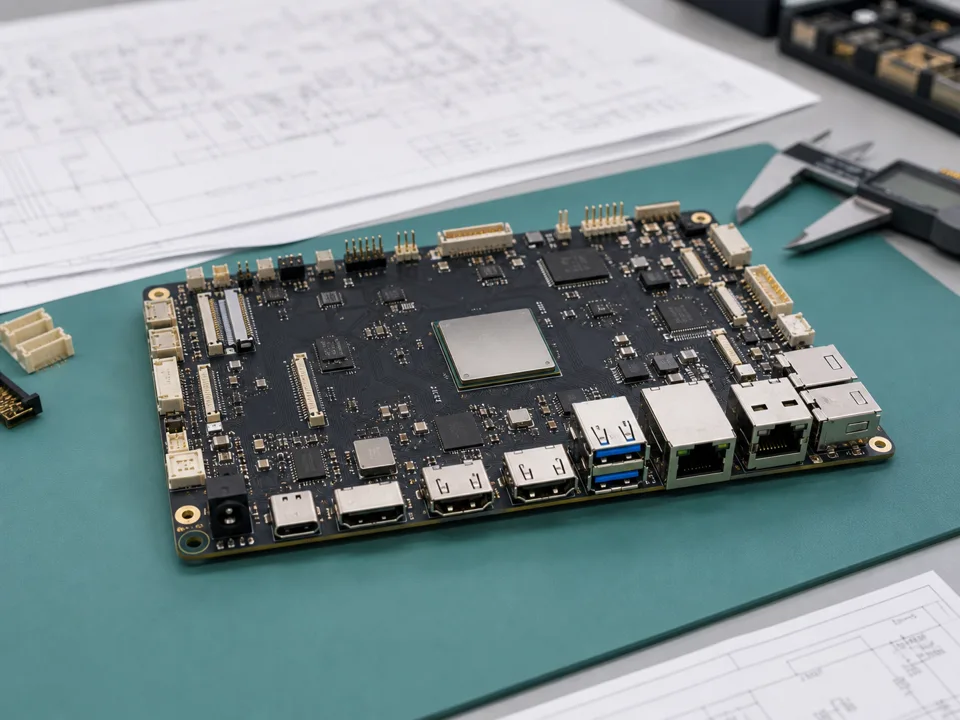
A custom SBC project becomes easier when mechanical, electrical, software, and production requirements are collected before board design starts. The goal is not only to make a board that can power on, but to make a board that fits the enclosure, supports the product workflow, and can move toward repeatable production.
For Custom SBC Requirements Checklist for Product Development, the final decision should be made with engineering and procurement in the same review. Engineers can judge BSP, interfaces, thermal behavior, and testing; procurement can check lifecycle, substitutions, MOQ, lead time, and whether the chosen direction still makes sense at production quantity.
Mechanical and enclosure information
Prepare the target PCBA outline, mounting hole positions, connector direction, height limits, keep-out areas, display opening, camera or speaker location, antenna location, cable route, and enclosure installation method. If the product already has a mold or industrial design, board layout should be discussed together with mechanical constraints.
For wall-mounted panels, handheld terminals, industrial controllers, and gateway products, connector location and cable direction often affect the final user experience. These details should be considered before schematic and PCB layout work becomes too fixed.
Function and interface requirements
List the required display interface, touch controller, Ethernet, USB, UART, RS485, CAN, GPIO, audio, camera, wireless module, storage, buttons, LEDs, sensors, power input, battery or UPS behavior, and any product-specific connector. It is also useful to separate required functions from optional functions.
If the project can start from a known platform, compare Rockchip SBC or Allwinner SBC directions first. If the operating system is the key decision, compare Android SBC and Linux SBC directions before locking the board design.
Component and IC selection
For production planning, component selection should consider availability, lifecycle, cost, performance, thermal behavior, certification path, and replacement risk. Key ICs, memory, storage, wireless modules, power components, connectors, and display/touch parts need review before production batch planning.
Avontek can discuss whether a customer needs to use a standard SBC, modify an existing board direction, or design a product-specific mainboard for the enclosure and production target.
Software and test requirements
Define the operating system, boot behavior, UI startup, application environment, driver requirements, network setup, peripheral tests, factory test items, and update method. Android BSP and Linux BSP requirements should be discussed together with hardware design because display, touch, wireless, camera, audio, Ethernet, and storage choices affect software bring-up.
Before starting a custom board discussion, prepare drawings, interface list, operating system direction, target SoC, expected quantity, delivery schedule, and any existing product photos or reference devices. This helps the engineering team evaluate the design path more accurately.