
Confirm product application, enclosure, operating system, display, I/O, wireless, power, quantity, cost target, lifecycle, and schedule.
Custom SBC Development
Custom SBC and Embedded Board Development
Custom SBC and custom embedded board development for Android and Linux products, including PCBA outline, mounting holes, connector layout, component selection, IC selection, BSP adaptation, driver integration, testing, and production support.
Your product carries your brand. Avontek builds the embedded platform behind it.
Custom SBC
Custom Embedded Board
Custom Android Board
Custom Linux Board
PCBA Customization
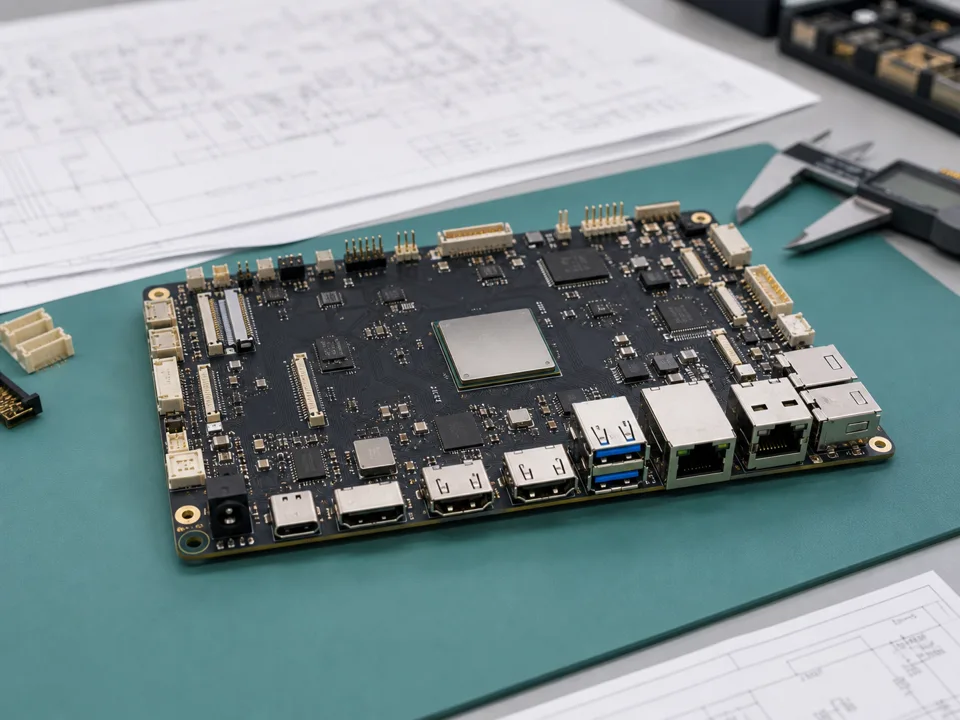
Custom SBC development for product-ready hardware
Avontek develops custom SBCs, custom embedded boards, carrier boards, and product-specific mainboards for OEM teams that already have a product direction, enclosure, user workflow, and brand experience to protect. We build the hardware platform behind that product: a board designed around the real enclosure, interface layout, software requirement, cost target, and production plan. A custom board can start from a proven Rockchip SBC or Allwinner SBC direction, then move toward a board design that fits the final product. For customers who need a complete finished touchscreen device instead of board-level development, Avontek also provides Smart Control Panels.
The work covers mechanical constraints, PCBA outline, mounting holes, connector placement, component location, function selection, IC selection, Android or Linux BSP adaptation, driver integration, testing, manufacturing coordination, and lifecycle supply planning.
For display-based products, Avontek can combine custom board development with Android SBC and Android BSP work. For gateway, control, data collection, and field device projects, Avontek can connect the hardware plan with Linux SBC and embedded Linux driver requirements.
When a custom SBC is needed
Many projects begin with a standard development board, but the final product often needs a different board shape, connector position, component height, power input, wireless module, or I/O combination. A custom SBC helps the hardware match the enclosure, assembly process, software image, production test plan, and long-term supply requirements.
Mechanical fit
Use a custom board when the PCBA outline, mounting holes, connector locations, cable direction, display position, or component height must match the customer enclosure or mold.
Interface layout
Adjust display, touch, camera, audio, Ethernet, USB, UART, RS232, RS485, CAN, GPIO, antenna, and power connector positions so the board fits the real product structure.
Function selection
Choose only the functions the product needs, such as Wi-Fi, Bluetooth, 4G/LTE, storage, battery, RTC, watchdog, speaker, microphone, sensor, relay, or industrial I/O options.
Cost and supply
Review component selection, IC availability, memory and storage options, power architecture, manufacturing path, testing method, and lifecycle supply before moving toward production.
Software integration
Connect the board design with Android BSP, Linux BSP, bootloader, kernel, device tree, display, touch, camera, audio, network, wireless, and peripheral driver adaptation.
What can be customized
A custom SBC project can change the mechanical design, component layout, interface set, IC selection, power design, wireless plan, operating system support, and production path. The goal is to build a board that matches the product instead of forcing the product to fit a standard board.
PCBA mechanical design
PCBA outline, board size, mounting holes, screw positions, connector openings, component height limits, cable direction, enclosure fit, and mold-based board shape.
Component placement
Display, touch, camera, audio, USB, Ethernet, serial, GPIO, power, antenna, wireless module, storage, heat-sensitive components, and height-limited parts can be positioned around the product structure.
Function and interface selection
Display and touch, camera, audio, microphone, speaker, Ethernet, Wi-Fi, Bluetooth, 4G/LTE, USB, UART, RS232, RS485, CAN, GPIO, storage, battery, RTC, watchdog, and power input can be selected by project need.
IC and component selection
Rockchip or Allwinner SoC, PMIC, memory, storage, wireless module, interface IC, power components, connectors, and key BOM items can be reviewed for performance, cost, availability, and lifecycle.
Android and Linux adaptation
Android BSP, Linux BSP, bootloader, kernel, device tree, display and touch drivers, camera, audio, Ethernet, wireless, storage, serial ports, GPIO, and product-specific system images can be adapted to the custom board.
Design around customer mold
When the enclosure is already defined, Avontek can design the board around the mechanical stack-up, connector openings, mounting points, display area, thermal path, assembly method, and prototype verification process.
Platform and software direction
Custom board development usually needs both a hardware platform decision and a software direction. Avontek can help evaluate Rockchip or Allwinner SoCs, choose Android or Linux, and define the required interfaces before schematic, layout, BSP work, and prototype testing begin.
Rockchip custom boards
PX30, RK3288, RK3566, RK3576, and RK3399 can be considered for Android terminals, HMI products, control panels, multimedia devices, and higher-performance embedded products.
Allwinner custom boards
A33, A64, R528, and R128 can be considered for cost-sensitive display, control, gateway, audio, and connected device projects.
Android and Linux software
Use an Android direction when the product needs touchscreen UI, app workflow, kiosk mode, multimedia, and display-rich operation. Use a Linux direction when the product needs gateway services, protocol conversion, equipment control, data collection, long-running services, and field I/O.
Industrial product requirements
For control cabinets, automation equipment, HMI terminals, IoT gateways, data collection devices, and edge systems, the same custom SBC process can be combined with industrial SBC interface and deployment planning.
Custom SBC development process
A custom SBC project should move from product requirements to hardware definition, software scope, prototype validation, and production planning in a controlled sequence. This reduces redesign risk and keeps mechanical, electrical, software, testing, and supply decisions aligned.
Compare Rockchip and Allwinner directions, choose interface functions, review IC options, and define the preliminary board architecture.
Design the PCBA outline, mounting holes, connector positions, component placement, power design, interface circuits, and manufacturable board layout.
Adapt Android or Linux BSP, bring up interfaces, prepare system images, integrate peripherals, and debug product-specific hardware functions.
Build samples, verify functions, adjust hardware or software, review BOM and testing, and prepare the project for manufacturing and delivery.
Custom SBC questions
- Can Avontek design a custom SBC based on a customer enclosure or mold?
- Yes. Avontek can review the enclosure, mounting positions, connector openings, display position, cable direction, component height limits, and assembly requirements, then design the PCBA outline, mounting holes, connector layout, and board structure around the customer's mechanical design.
- What parts of a custom SBC can be changed?
- A custom SBC project can include PCBA outline, board size, mounting holes, connector position, component placement, display and touch interfaces, camera, audio, Ethernet, USB, UART, RS232, RS485, CAN, GPIO, wireless modules, power input, battery, RTC, watchdog, memory, storage, PMIC, and other IC or component choices.
- Do you support custom Android boards and custom Linux boards?
- Yes. Avontek supports custom Android board and custom Linux board projects based on Rockchip and Allwinner SoCs. The work can include Android BSP, Linux BSP, bootloader, kernel, device tree, driver adaptation, display and touch bring-up, peripheral integration, system image preparation, and functional testing.
- What information is needed before starting a custom SBC project?
- Useful starting information includes the product application, target SoC or performance requirement, operating system, display and touch requirements, I/O list, wireless needs, power input, enclosure or mold files, connector position requirements, target quantity, lifecycle expectation, and project schedule.
- When is a custom SBC better than a standard SBC?
- A custom SBC is usually better when a standard board does not match the product enclosure, connector position, interface set, cost target, power design, wireless requirement, component lifecycle, production testing plan, or long-term supply requirement.
Request a Quote
Discuss an Android or Linux SBC project
Share your SoC preference, operating system, display, I/O, quantity, and customization requirements. Our team will review the project direction and respond with practical next steps.
- Rockchip and Allwinner SBC selection
- Android and Linux BSP support
- Custom mainboard and production planning