
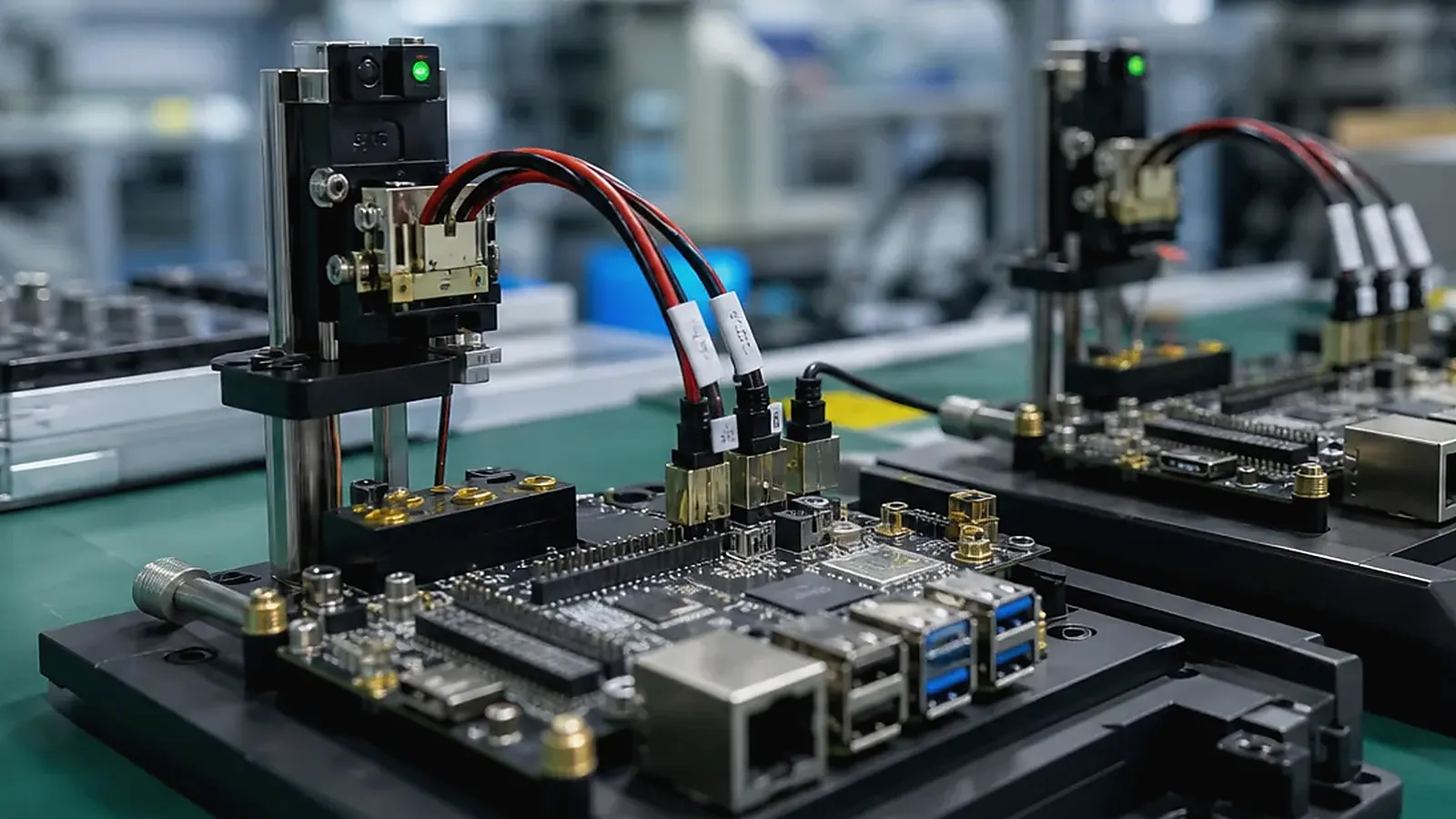
PCBA production for an embedded SBC project is not just assembly. It connects BOM review, component purchasing, SMT, inspection, board bring-up, software flashing, functional testing, packaging, and delivery records. A board that works as a prototype still needs a controlled production flow before it can become a repeatable product.
Manufacturing review should be based on records, not memory. For PCBA Production Flow for Embedded SBC Projects: BOM, SMT, Assembly, Testing, and Delivery, keep the approved BOM, image version, fixture version, serial number rule, label file, packaging sample, defect photos, and rework notes together so a later batch can be compared with the pilot run.
For customers building Android SBC, Linux SBC, Custom SBC, or smart terminal products, manufacturing should be discussed before the pilot run. The earlier the test method and material risks are visible, the easier it is to control quality.
Start with BOM and production data
Before production, confirm BOM, approved alternates, Gerber files, pick-and-place data, schematic revision, PCB revision, assembly notes, firmware image, test procedure, labels, packaging, and quantity. Missing or outdated production data creates confusion between engineering, purchasing, and manufacturing.
| Production item | What to confirm |
|---|---|
| BOM | Approved parts, alternates, lifecycle risk, key ICs |
| PCB data | Gerber, stack-up, panelization, test points |
| Assembly | SMT, through-hole, connectors, manual steps |
| Software | Android/Linux image, flashing tool, version name |
| Testing | Power, I/O, display, touch, wireless, storage, services |
| Delivery | Labels, packaging, accessories, batch record |
The official IPC standards resources are useful background for electronics manufacturing expectations, but every embedded product still needs its own functional test and delivery plan.
SMT, assembly, and inspection
SMT quality depends on controlled materials, PCB process, solder paste, placement, reflow, and inspection. Connectors, displays, cables, antennas, speakers, and mechanical parts may also require manual assembly. These steps need review for repeatability, not only prototype success.
Inspection may include visual checks, AOI coordination, connector alignment, polarity checks, and solder quality review. If a connector is hard to place or a cable is easy to reverse, the design needs review before production scales.
For embedded SBCs, manual assembly often creates more risk than the main SMT process. Display FPC cables, antennas, speakers, batteries, wall-panel brackets, or terminal blocks may be installed after reflow. The production plan should define cable direction, torque or fixture needs, adhesive use, label placement, and inspection criteria. Small assembly details can create field failures if they are left to operator judgment.
Material handling should also be controlled. Moisture-sensitive ICs, displays, wireless modules, and connectors should be stored and handled according to supplier guidance. Procurement should track approved alternates and confirm when a key part changes. A substitute part that looks equivalent can still affect BSP, testing, or long-term reliability.
Software flashing and functional testing
Embedded SBC production usually includes software flashing. The factory must know which image to use, how to flash it, how to record the version, and whether serial numbers, MAC addresses, licenses, or customer configuration must be written.
Functional testing needs to match the product. For a gateway, test Ethernet, RS485, CAN, wireless, storage, and services. For an HMI, test display, touch, app startup, audio, and power recovery. For smart terminals, test camera, scanner, printer, NFC, USB, and wireless where used.
The flashing process should be treated as part of production, not as an engineering side task. The image version, flashing tool version, configuration file, and any written identifiers should be recorded. If the product needs a customer app, gateway address, cloud endpoint, or regional setting, those items should be included in the production checklist.
Functional test limits should be clear. A simple “Wi-Fi OK” result is weaker than recording whether the unit scanned a known SSID, connected to a fixture network, or passed a data transfer test. Similar detail helps for Ethernet, serial ports, display, touch, audio, camera, and storage.
Pilot run feedback
A pilot run should validate the production process, not only the board. Track assembly problems, flashing time, fixture failures, packaging issues, label mistakes, and repeated defects. If workers need special handling for every unit, the design or process may need improvement.
Procurement needs to confirm whether key components can support follow-up batches. Engineering should review failures and decide whether they are design, material, software, or process issues.
Pilot feedback should be documented with photos, batch data, and root-cause notes. A loose connector, poor fixture contact, repeated flashing failure, or packaging scratch should not be treated as an isolated event until the cause is understood. When the same issue appears twice, it should be assigned to an owner and closed before mass production.
Delivery control
Delivery needs to cover batch number, tested image version, test result, serial number or MAC record, packaging status, and known open issues if any. For repeat orders, compare the new lot with the approved baseline.
For related reading, see factory test coverage for embedded boards and EVT, DVT, and PVT development stages.
Incoming inspection on the buyer side should check labels, accessories, visible appearance, image version, and a sample of functional tests. This does not replace factory testing, but it catches shipping damage, wrong packaging, and configuration drift before products are deployed.
For long-term supply, keep a production baseline: BOM revision, PCB revision, software image, test fixture, packaging file, and approved sample. When a later batch changes, the team can compare it against the baseline instead of relying on memory.
After the first batch, compare the actual flashing time, fixture time, rework count, and packaging issues against the plan. These small numbers often reveal whether the next order can scale smoothly or still depends on manual fixes.
Final recommendation
Treat PCBA production as a controlled workflow from BOM to delivery. A good manufacturing plan makes the product testable, traceable, and repeatable across pilot and production batches.
Frequently Asked Questions
What details are useful before we talk about a Manufacturing & Testing build?
Send the use case, OS preference, display or I/O list, enclosure limits, power input, wireless needs, target quantity, and timing. With that context, Avontek can suggest a Manufacturing & Testing hardware path that fits the real device instead of only comparing board specifications.
When is a custom SBC worth considering for a Manufacturing & Testing product?
A custom SBC is worth reviewing when the device needs a fixed PCBA outline, connector position, display interface, power input, wireless module, mounting method, or cost target that a catalog board cannot meet cleanly.
Can Avontek stay involved after Manufacturing & Testing samples are built?
Yes. Avontek can help with Manufacturing & Testing board choice, Android or Linux BSP discussion, peripheral checks, sample bring-up, test fixtures, image review, and factory coordination.