
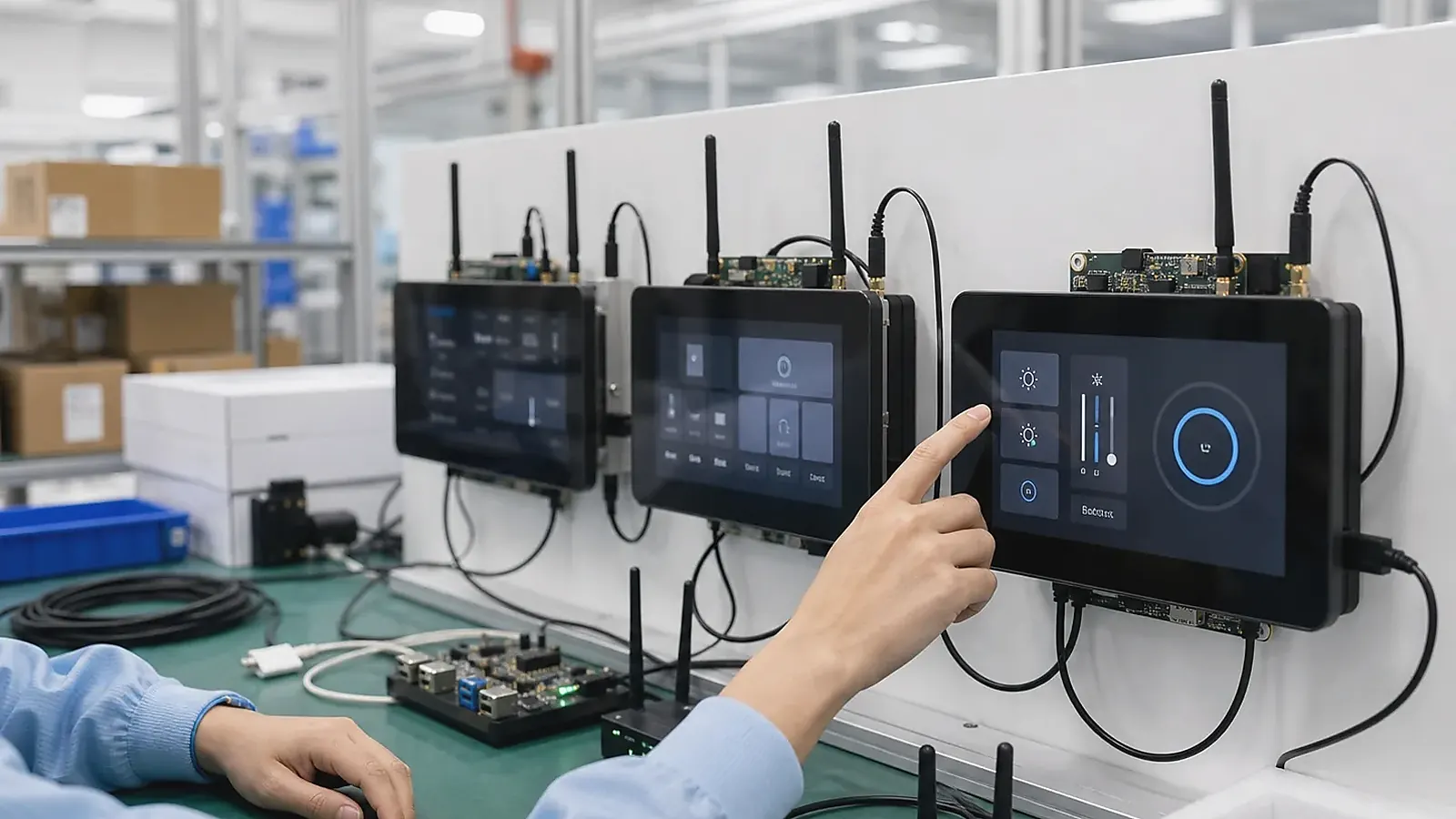
OEM smart control panel projects need more than a working sample. The product must match the buyer’s brand, software workflow, packaging expectations, installation method, functional test requirements, and production schedule. A clear checklist helps engineering, project management, and procurement avoid late changes when the first batch is already in motion.
For a smart control panel project, the wall installation details matter as much as the CPU. On OEM Smart Control Panel Branding, Testing, and Production Checklist, check wall box depth, relay or control wiring, Wi-Fi and Bluetooth location, speaker opening, microphone path, branding area, language pack, and how installers will provision the panel after delivery.
For buyers looking for a complete wall-mounted product, Smart Control Panels are the right starting point. If the project requires a special enclosure, board outline, connector layout, or hardware platform, the discussion may move toward Custom SBC or Android SBC development.
Branding scope
Branding can be simple or deep. Simple branding may include logo, boot screen, packaging, label, and user manual changes. Deeper branding may include UI theme, app workflow, model naming, color options, enclosure changes, custom icons, language files, and region-specific configuration. The buyer should define which items are required before asking for pricing and schedule.
| Branding item | What to prepare |
|---|---|
| Logo | Vector file, color rules, placement, size limits |
| Boot screen | Image file, animation need, timing expectation |
| UI theme | Colors, icons, layout direction, language list |
| Packaging | Box artwork, label rules, accessory list |
| Manual | Installation notes, user guide, compliance text |
| Model label | SKU, serial number, barcode, MAC address rules |
Branding decisions affect samples, production files, packaging purchasing, and quality checks. They should not be left until the production order is placed.
Software and configuration approval
OEM panels often need a controlled Android image or application configuration. Confirm app startup, launcher behavior, permissions, screen timeout, language selection, Wi-Fi setup, default settings, and update method. If the product connects to a customer platform, test login, pairing, gateway control, offline behavior, and error messages before sample approval.
The official Wi-Fi Alliance certification information is useful background for wireless interoperability expectations. For an OEM panel project, the practical task is still to validate Wi-Fi behavior in the real installation environment.
Configuration approval should be documented with version numbers. The approved sample should record hardware model, Android image version, customer app version, boot logo file, UI language package, packaging file, and label format. Without this record, later batches can drift from the sample that the buyer originally approved.
Functional testing checklist
Every production unit needs testing against the project’s actual functions. A basic smart control panel test may include:
1. Confirm Android image version and customer app version.
2. Test display color, brightness, and touch response.
3. Test Wi-Fi, Bluetooth, Ethernet, speaker, microphone, and buttons.
4. Confirm boot logo, app startup, language, and default settings.
5. Test gateway or platform connection if required.
6. Check serial number, MAC address, label, and packaging.
If the panel controls room devices, add scene control, HVAC, curtain, relay, RS485, or gateway tests. If the panel is for hotel or apartment deployment, include installation accessories and spare unit handling.
The test checklist should be agreed before mass production. If the buyer expects gateway pairing, app login, voice function, or room-scene verification, those items should be listed explicitly. Otherwise the factory may only test standard hardware functions and miss the customer-specific workflow.
Sample approval and pilot run
Sample approval needs to cover hardware appearance, UI, branding, software version, packaging draft, installation fit, wireless performance, and functional test results. A pilot run should validate assembly, flashing, test fixture, packaging, labels, and shipping process. Do not approve mass production only because one engineering sample looks good.
Pilot units should be treated as a rehearsal for production. The team should record setup time, packaging issues, software flashing time, inspection failures, and installation feedback. These notes help improve the production checklist before the order scales.
For related preparation, read planning inputs for smart control panel projects and screen size and model fit for control panels.
Procurement and delivery planning
Procurement needs to confirm MOQ, lead time, branding setup cost, sample schedule, packaging schedule, spare unit plan, and follow-up batch support. If the project uses a custom app or system image, define how version updates are communicated between batches.
The buyer should also define acceptable quality criteria: screen defects, touch response, enclosure appearance, label placement, packaging condition, software version, and included accessories. These details make incoming inspection easier.
For larger deployments, order planning needs to cover spare units and replacement policy. A hotel, apartment, or smart home brand may need identical panels months after the first delivery. Confirm whether the same model, enclosure color, packaging, and software image can be repeated in follow-up batches.
Final recommendation
Treat OEM smart control panel production as a product launch, not a sample purchase. Prepare branding files, software requirements, test expectations, packaging details, quantity plan, and approval criteria before ordering. Clear preparation helps the supplier deliver a panel that is consistent across samples, pilot run, and production.
Frequently Asked Questions
What details are useful before we talk about a Smart Control Panels build?
Send the use case, OS preference, display or I/O list, enclosure limits, power input, wireless needs, target quantity, and timing. With that context, Avontek can suggest a Smart Control Panels hardware path that fits the real device instead of only comparing board specifications.
When is a custom SBC worth considering for a Smart Control Panels product?
A custom SBC is worth reviewing when the device needs a fixed PCBA outline, connector position, display interface, power input, wireless module, mounting method, or cost target that a catalog board cannot meet cleanly.
Can Avontek stay involved after Smart Control Panels samples are built?
Yes. Avontek can help with Smart Control Panels board choice, Android or Linux BSP discussion, peripheral checks, sample bring-up, test fixtures, image review, and factory coordination.