
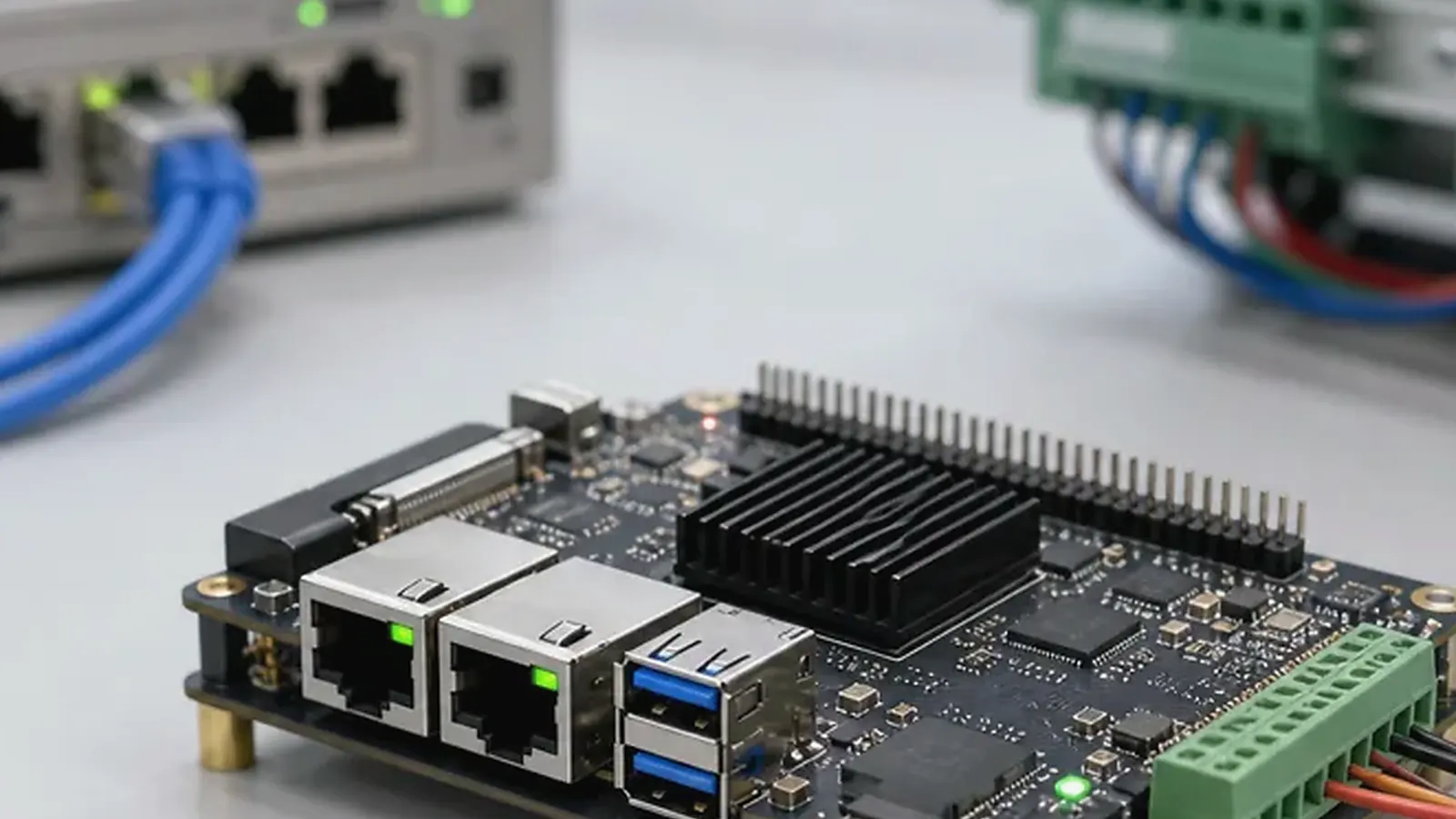
Linux driver adaptation connects the selected board hardware with the product software. A Linux-capable board may boot a demo image, but the final product still needs Ethernet, RS485, CAN, GPIO, USB, storage, watchdog, wireless, display, and other interfaces to work under real conditions. Driver work should be planned with the schematic, BOM, enclosure, and production test method.
A practical driver plan for Linux Driver Adaptation Checklist: Ethernet, RS485, GPIO, Storage, Watchdog, and Device Tree includes reproduction steps, logs, image version, test hardware, and ownership for each issue. Without that record, the same bug can reappear between engineering samples, pilot production, and repeat batches under a different name.
For a Linux SBC, the main question is not only whether Linux runs. The question is whether the kernel, device tree, root filesystem, services, and drivers match the final product. This is especially important for gateways, industrial control devices, and field equipment.
Start from kernel and device tree
Linux BSP work usually includes bootloader, kernel version, device tree, root filesystem, drivers, configuration files, services, and flashing tools. The official Linux kernel documentation is useful reference material, but embedded products depend on board-specific validation.
| Driver area | What to confirm |
|---|---|
| Ethernet | PHY, MAC, link behavior, fixed IP/DHCP, reconnect |
| RS485/serial | UART mapping, direction control, baud rate, isolation |
| CAN/GPIO | Transceiver, voltage level, protection, permissions |
| Storage | eMMC, SD card, partitions, write endurance, logs |
| Watchdog | Timeout, trigger policy, recovery, log retention |
| Wireless | Module, firmware, antenna, reconnect, regulatory direction |
| Factory image | Flashing tool, version, test script, known limitations |
The device tree needs to match the actual board, not only the reference design. If a Custom SBC changes components or pin use, device tree and driver validation need to be part of the schedule.
Ethernet, serial, and field I/O
Ethernet driver checks need to cover link detection, speed, reconnect, MAC address handling, and behavior after power loss. RS485 requires correct direction control and timing. CAN requires transceiver configuration and protocol-level testing. GPIO requires voltage, direction, permissions, debounce, and protection review.
For Industrial SBC and IoT Gateway SBC products, field interfaces need testing with real devices where possible. Electrical loopback is useful, but it does not prove protocol behavior with PLCs, meters, sensors, or gateways.
Storage, logs, and watchdog
Storage planning is part of driver and BSP quality. A product that writes logs or local data needs a filesystem and storage device that can handle real write patterns. Watchdog behavior should recover the device without hiding the reason for failure. Logs should survive long enough to diagnose field issues.
Power-loss testing is important. Repeatedly interrupt power while services are running, then check filesystem health, service recovery, logs, and interface behavior. This test often reveals problems that a short bench demo misses.
Procurement should understand that storage and interface components can affect software. Changing eMMC, SD card, Ethernet PHY, RS485 transceiver, wireless module, or PMIC may require driver checks and image retesting. Approved alternates need review before pilot production, not after a shortage appears.
Services and application boundary
Linux driver adaptation should be coordinated with services. Drivers may appear correctly, but the application still needs permissions, device names, startup order, and error handling. Define who owns kernel and driver work, who owns service scripts, and who owns application logic.
For related context, read kernel, device tree, rootfs, and driver support and service recovery and update design for Linux controllers.
Production testing and delivery
Production delivery needs to cover a flashable image, flashing instructions, supported interface list, driver limitations, test script, image version, and change log. Factory testing needs to verify Ethernet, serial ports, CAN, GPIO, USB, storage, watchdog, service startup, and identifiers such as MAC address or serial number.
If a component changes in a future batch, the driver and test baseline need review. Silent changes to Ethernet PHY, wireless module, storage, or serial transceiver can create field issues.
A useful Linux BSP delivery should also include device naming notes, service startup notes, log locations, known issue list, and recovery instructions. These documents help application engineers and factory teams work without guessing how the image was built.
Pilot validation needs to use real cables, real field devices, the final enclosure, and expected power supply. Test network loss, serial timeouts, full storage, repeated reboot, watchdog trigger, and update recovery. Driver adaptation is only complete when the product survives likely field conditions.
For support, keep a golden image and a reference unit. When a field issue appears, the team can compare software version, driver behavior, interface wiring, and logs against the approved baseline.
Change control should be simple but strict. If the kernel, device tree, root filesystem, storage part, Ethernet PHY, wireless module, or field transceiver changes, record the reason, test result, and affected product batches. This prevents production teams from shipping a board that is electrically similar but software-different.
For RS485 and GPIO work, include one test that repeats many times rather than only one pass/fail check. Direction control, debounce, and timing bugs often appear after repeated polling or when the CPU is busy with logging and network traffic.
Final recommendation
Plan Linux driver adaptation around the final product: kernel, device tree, Ethernet, RS485, GPIO, storage, watchdog, services, and factory testing. A stable Linux board is one whose interfaces can be tested, recovered, and supported in production.
Frequently Asked Questions
What details are useful before we talk about a BSP & Driver build?
Send the use case, OS preference, display or I/O list, enclosure limits, power input, wireless needs, target quantity, and timing. With that context, Avontek can suggest a BSP & Driver hardware path that fits the real device instead of only comparing board specifications.
When is a custom SBC worth considering for a BSP & Driver product?
A custom SBC is worth reviewing when the device needs a fixed PCBA outline, connector position, display interface, power input, wireless module, mounting method, or cost target that a catalog board cannot meet cleanly.
Can Avontek stay involved after BSP & Driver samples are built?
Yes. Avontek can help with BSP & Driver board choice, Android or Linux BSP discussion, peripheral checks, sample bring-up, test fixtures, image review, and factory coordination.