
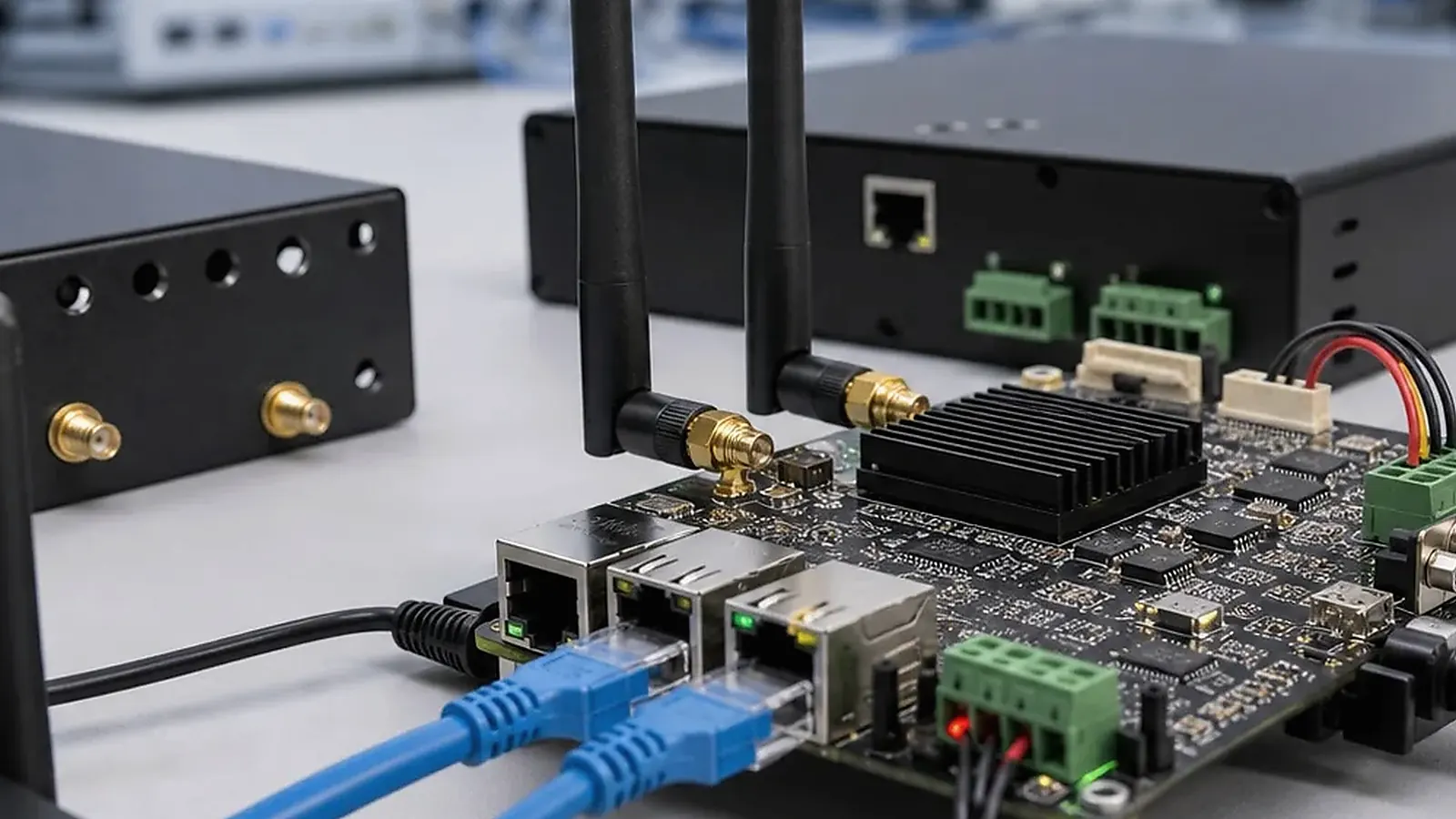
Protocol planning is one of the most important parts of an IoT gateway project. The gateway may collect field data through RS485, CAN, UART, Ethernet, GPIO, or wireless modules, then convert it into MQTT, HTTP, TCP, or a customer cloud protocol. If the protocol plan is vague, the hardware team may choose the wrong interfaces and the software team may discover missing requirements too late.
For IoT Gateway Protocol Planning: MQTT, Modbus, RS485, CAN, Ethernet, and Cloud Connection, the strongest early test is not a dashboard screenshot. It is a long run with unstable network, real serial devices, power interruptions, log rotation, and a forced restart. That test exposes whether the gateway behaves like field equipment or only like a development bench.
An IoT Gateway SBC should be selected around the actual data path: which devices connect to the gateway, how often data is collected, where it is stored, how it is uploaded, and what happens when the network fails.
Map the data flow first
Start by drawing a simple path from field device to cloud or local server. Identify each connected device, protocol, cable type, baud rate, packet frequency, data size, and error behavior. A gateway that reads one meter every minute is different from a gateway that collects high-frequency data from multiple controllers.
| Layer | Questions to answer |
|---|---|
| Field device | Sensor, PLC, meter, controller, relay, access device |
| Field protocol | Modbus RTU, CAN, UART, GPIO, proprietary serial |
| Gateway interface | RS485, RS232, CAN, Ethernet, USB, wireless |
| Local logic | Filtering, buffering, alarms, local database, rules |
| Upload protocol | MQTT, HTTP, TCP, customer API, local server |
| Failure behavior | Retry, buffer, alert, watchdog, local fallback |
The official MQTT project site is useful background for MQTT messaging, but the gateway product still needs hardware, Linux service, and deployment planning.
RS485, Modbus, and CAN planning
RS485 is common for field wiring because it supports long cables and multi-drop networks when designed correctly. Modbus RTU is common in meters and industrial devices. CAN is common in equipment and control environments. For each interface, confirm isolation, termination, connector style, grounding, cable length, and test method.
The board should expose the right ports without relying on fragile adapters. For industrial gateway products, a Custom SBC may be useful when the product needs two RS485 ports, CAN, terminal blocks, custom power input, and clear installer wiring.
Cloud and local service behavior
Protocol conversion is not only parsing data. The gateway software should handle network loss, cloud timeout, local buffering, duplicate messages, timestamps, device identity, logs, and remote updates. A Linux SBC is often used because it can run services, protocol stacks, local databases, and update tools in a controlled way.
Engineers should define whether data can be lost, how long it must be buffered, and how the gateway identifies devices. Project managers should define how logs are collected when a field issue occurs. Procurement should check memory and storage choices against the expected write load.
Security should be defined together with the protocol plan. Device credentials, TLS certificates, local user accounts, debug access, and update permissions all affect deployment risk. A gateway that bridges field devices to a cloud system should not ship with open debug services, shared passwords, or unclear credential handling.
Hardware selection around protocols
Protocol requirements affect processor choice, memory, storage, connector layout, and wireless modules. A simple MQTT uploader may not need a high-end SoC. A gateway that performs local analytics, encryption, multiple protocol bridges, and dashboard display may need more headroom. If the platform family is open, compare Rockchip SBC and Allwinner SBC directions.
Security should also be planned. Device credentials, certificates, secure storage, update control, and debug access should not be added as an afterthought.
Testing protocol gateways
Factory testing needs to cover loopback or fixture tests for RS485, CAN, Ethernet, USB, wireless, storage, and service startup. Pilot testing needs to use real field devices where possible. Simulators are useful, but actual devices often reveal timing, noise, cable, or protocol edge cases.
For related articles, read board requirements for Linux gateways and controllers and field I/O mapping for IoT gateways. These help connect protocol requirements with board interfaces.
Testing needs to cover failure cases, not only normal communication. Disconnect a field device, interrupt the network, send malformed packets, fill the local buffer, and restart the gateway during data upload. The product should recover in a predictable way and leave enough logs for support teams to understand what happened.
For production, the factory test should record firmware version, protocol configuration, serial number, MAC address, and pass/fail result. When a field issue appears later, this record helps compare the deployed unit with the approved image and test baseline.
If the gateway will be installed by third parties, provide a simple protocol commissioning checklist. It needs to cover baud rate, device address, topic or endpoint, credential status, server address, and local test result. Clear commissioning notes reduce installation support calls.
Final recommendation
Plan IoT gateway protocols before choosing the board. Define field devices, physical interfaces, protocol stacks, cloud connection, local buffering, failure handling, and testing. A clear protocol map leads to a better gateway SBC choice and fewer surprises during deployment.
Frequently Asked Questions
What details are useful before we talk about an IoT Gateway build?
Send the use case, OS preference, display or I/O list, enclosure limits, power input, wireless needs, target quantity, and timing. With that context, Avontek can suggest a IoT Gateway hardware path that fits the real device instead of only comparing board specifications.
When is a custom SBC worth considering for an IoT Gateway product?
A custom SBC is worth reviewing when the device needs a fixed PCBA outline, connector position, display interface, power input, wireless module, mounting method, or cost target that a catalog board cannot meet cleanly.
Can Avontek stay involved after IoT Gateway samples are built?
Yes. Avontek can help with IoT Gateway board choice, Android or Linux BSP discussion, peripheral checks, sample bring-up, test fixtures, image review, and factory coordination.