
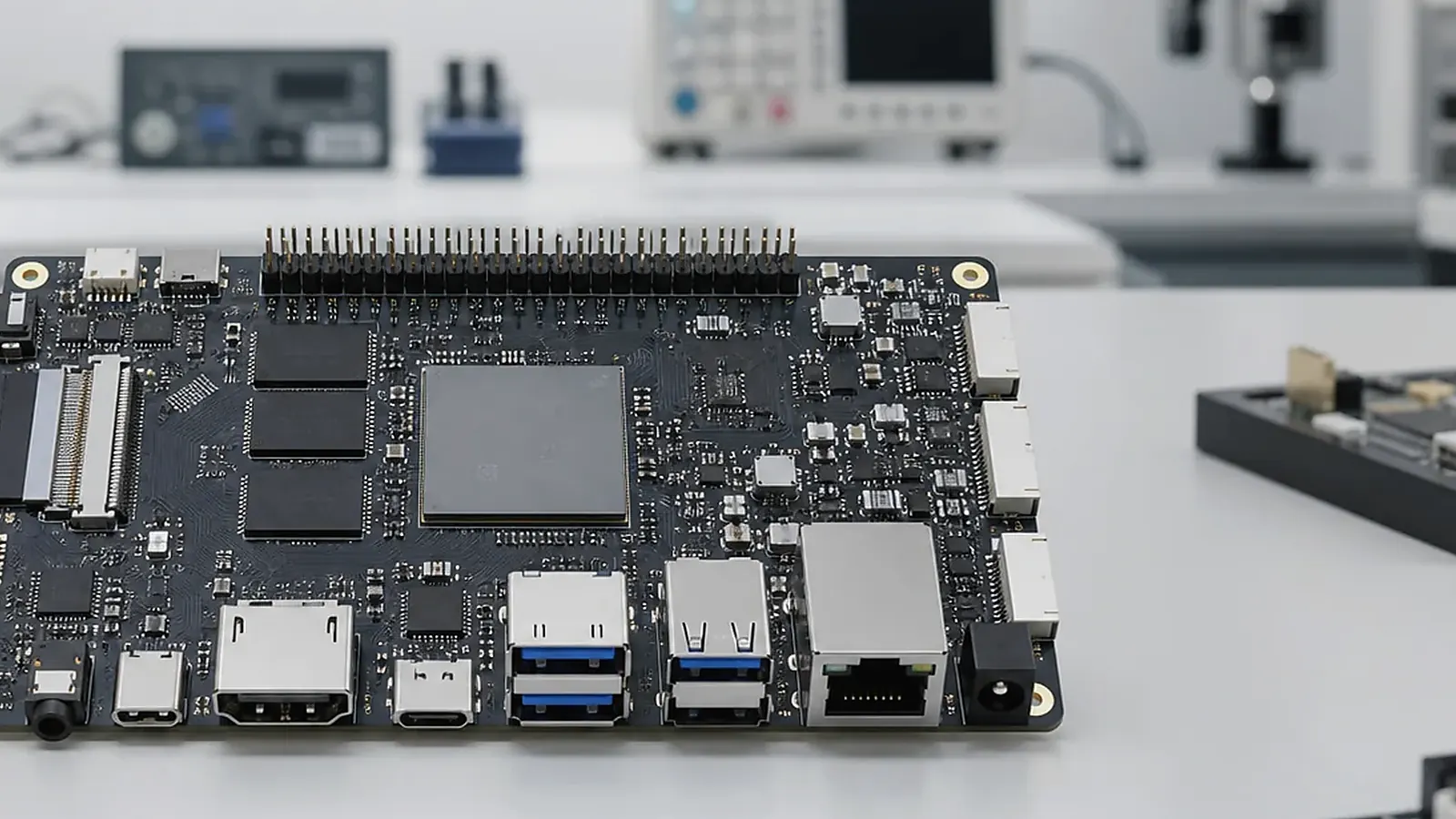
BOM planning is where custom SBC design becomes a business decision as much as an engineering decision. The board must meet performance, power, interface, thermal, software, supply, and cost targets. Choosing the wrong IC, wireless module, display connector, memory, storage, or PMIC can create driver work, purchasing risk, production delay, or field reliability problems.
A custom SBC review should start with the physical product. For Custom SBC BOM and Component Selection: IC Choice, Lifecycle, Supply, and Cost Control, a supplier can give a better answer after seeing the enclosure drawing, mounting points, cable routes, connector direction, display part number, target quantity, and the functions that must stay unchanged from the sample stage to production.
For a Custom SBC, component selection needs review by engineering, procurement, and project management together. Engineers understand electrical and software impact. Procurement understands availability, lead time, and cost. Project managers understand schedule and product commitments.
Start with the system architecture
The main architecture choices include SoC, memory, storage, PMIC, Ethernet PHY, wireless module, audio codec, display bridge, touch controller, camera sensor, power protection, connectors, and optional industrial interfaces. These choices needs to match the product requirement list, not only the lowest cost option.
If the product needs Android UI, display, touch, and app behavior, compare Android SBC platform requirements. If it needs gateway or control behavior, compare Linux SBC requirements. If processor direction is open, compare Rockchip SBC and Allwinner SBC options by BSP, interfaces, supply, and cost.
BOM planning table
| BOM item | What to check |
|---|---|
| SoC | OS support, performance, lifecycle, thermal behavior |
| Memory | Capacity, package, availability, validated combinations |
| Storage | eMMC size, write endurance, firmware support, supply |
| PMIC | Power sequencing, protection, availability, reference support |
| Wireless | Wi-Fi/Bluetooth/LTE module, antenna, certification path |
| Display/touch | Interface, controller, cable, supply consistency |
| Ethernet/serial | PHY, RS485/CAN ICs, isolation, driver support |
| Connectors | Mechanical fit, durability, sourcing, assembly ease |
This table needs review before schematic release. A late component change may affect layout, BSP, test fixtures, and purchasing.
Lifecycle and substitution planning
Embedded products often ship for years. Component lifecycle should therefore be part of the first design review. Ask whether critical components have stable supply, second-source options, or approved alternates. If an alternate wireless module or touch controller is selected later, software work may also be required.
The official JEDEC standards and documents are useful reference points for semiconductor and memory-related industry standards, but each custom board still needs supplier-specific lifecycle review.
For critical parts, create an approved vendor list rather than leaving purchasing decisions open. The list should identify preferred parts, acceptable alternates, and parts that cannot be changed without engineering approval. Memory, storage, PMIC, wireless module, touch controller, display bridge, and Ethernet PHY are common controlled items because substitutions can affect boot, drivers, wireless behavior, thermal performance, or factory test results.
Cost control without hidden cost
Cost control should look at total product cost, not only PCB BOM. A cheaper component may require new driver work, slower bring-up, lower yield, more factory test time, or higher field support cost. A slightly more expensive module with proven BSP support may reduce total project risk.
Procurement should ask for expected quantity, target cost, lifecycle expectation, and acceptable alternatives. Engineering should mark components that are difficult to replace, such as PMIC, memory, storage, wireless module, touch controller, and display path components.
Software impact of component choice
Component selection affects BSP. Android projects may need display, touch, camera, audio, Wi-Fi, Bluetooth, and permission configuration. Linux projects may need device tree changes, kernel drivers, Ethernet PHY setup, RS485 direction control, storage settings, and service startup changes.
If a component is chosen only because it is cheap but has weak driver support, the project may lose time during bring-up. This is why BOM review needs to cover software engineers early.
A practical rule is to flag every component that touches software. Display panels, touch controllers, wireless modules, Ethernet PHYs, storage, audio codecs, cameras, sensors, and power-management ICs should not be swapped casually. Even when the pinout looks similar, firmware, calibration, timing, or production test behavior may change.
Production and test impact
The BOM also affects production testing. Test points, connectors, wireless modules, storage, serial numbers, MAC addresses, and calibration data should be planned. If production requires programming or calibration for a component, define that flow before the pilot run.
For related reading, see EVT, DVT, and PVT development stages and factory test coverage for embedded boards.
Procurement should also ask how BOM changes are communicated between batches. A supplier should not silently replace a key component if that part affects firmware, image flashing, driver support, certification, or product behavior. A simple engineering change notice process can prevent unexpected software and field problems.
Final recommendation
Choose custom SBC components by balancing engineering fit, BSP support, supply stability, lifecycle, cost, and production test needs. The lowest BOM is not always the lowest project cost. A good BOM is one that can be built, tested, supported, and purchased repeatedly.
Frequently Asked Questions
What details are useful before we talk about a Custom SBC build?
Send the use case, OS preference, display or I/O list, enclosure limits, power input, wireless needs, target quantity, and timing. With that context, Avontek can suggest a Custom SBC hardware path that fits the real device instead of only comparing board specifications.
When is a custom SBC worth considering for a Custom SBC product?
A custom SBC is worth reviewing when the device needs a fixed PCBA outline, connector position, display interface, power input, wireless module, mounting method, or cost target that a catalog board cannot meet cleanly.
Can Avontek stay involved after Custom SBC samples are built?
Yes. Avontek can help with Custom SBC board choice, Android or Linux BSP discussion, peripheral checks, sample bring-up, test fixtures, image review, and factory coordination.