
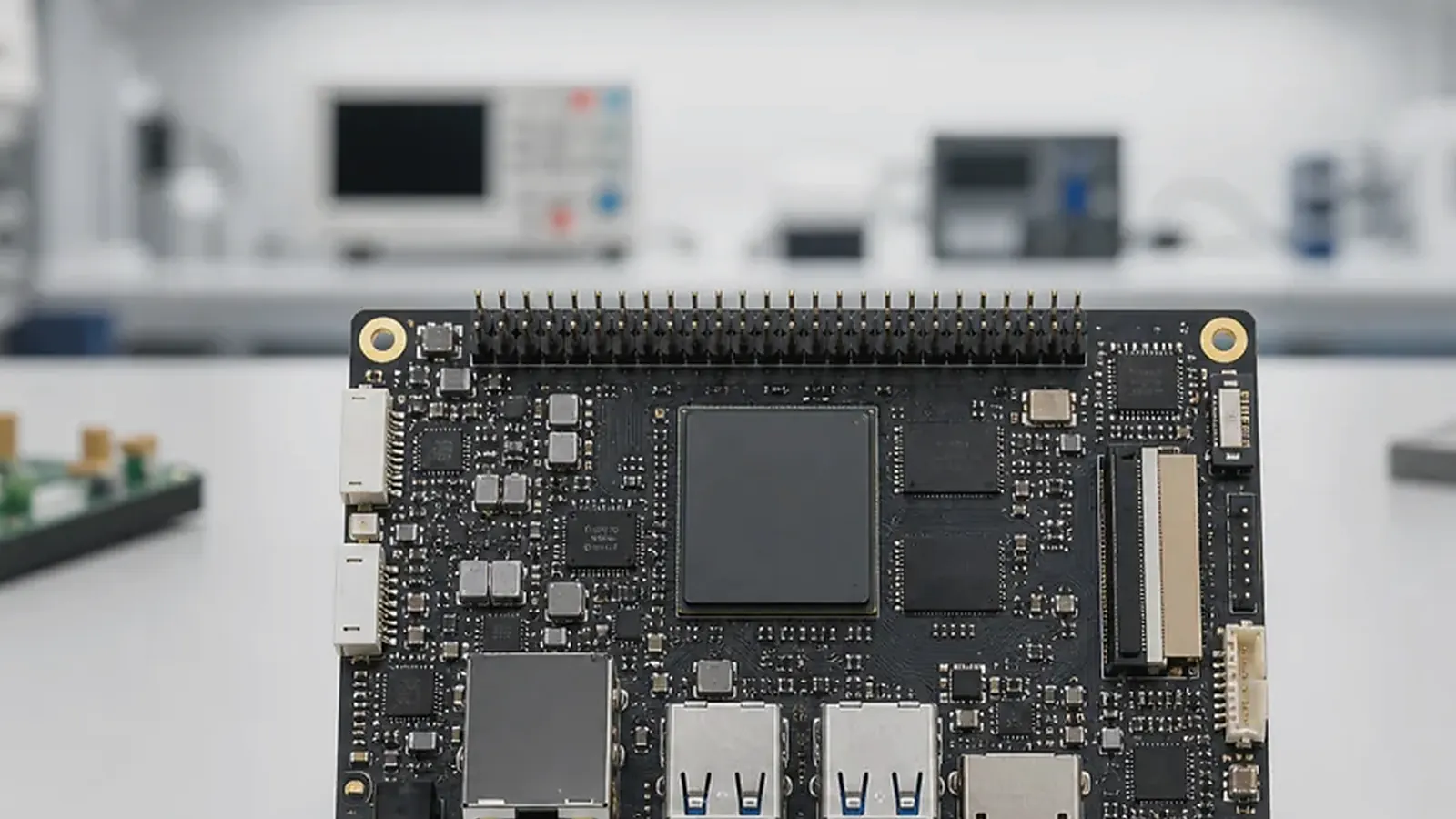
Custom Rockchip SBC development usually starts when a standard board proves the platform direction but does not match the final product. The software may run, the display may work, and the application may be validated, but the production device still needs a different board shape, connector position, display route, wireless module, power input, mounting hole layout, or cost structure. At that point, custom board development can make the product cleaner and easier to manufacture.
A practical driver plan for Custom Rockchip SBC Development: BSP, Interfaces, Enclosure, and Production Planning includes reproduction steps, logs, image version, test hardware, and ownership for each issue. Without that record, the same bug can reappear between engineering samples, pilot production, and repeat batches under a different name.
The goal is not to customize everything. The goal is to remove real product friction. A good custom Rockchip project connects hardware, Android or Linux BSP, enclosure, testing, and supply planning from the beginning.
When standard Rockchip SBCs are enough
A standard Rockchip SBC may be the right choice for evaluation, software development, demos, pilot systems, and some production devices. If the board fits the enclosure, the display and touch are supported, the connectors are accessible, the power input is suitable, and the required interfaces are already tested, staying standard can save time and cost.
Standard boards are also useful before custom development because they let the team confirm Android or Linux direction, application performance, display behavior, wireless stability, and basic I/O before investing in a new PCB.
When custom Rockchip board design makes sense
Customization becomes useful when the standard board creates repeated compromises. Common reasons include:
- PCBA outline does not fit the enclosure.
- Mounting holes or connector direction are wrong.
- Display, touch, camera, audio, or USB routing needs a different layout.
- Product requires terminal blocks, dual Ethernet, RS485, CAN, or special I/O.
- Wi-Fi, Bluetooth, LTE, or antenna placement must change.
- Power input, protection, or restart behavior is product-specific.
- Production quantity justifies BOM optimization.
- Factory testing needs better fixture access.
For these projects, a Custom SBC direction can reduce cables, adapters, assembly time, and long-term support risk.
Android and Linux BSP planning
Rockchip custom boards usually require BSP review. For Android, the work may include display timing, touch driver, camera, audio, Wi-Fi, Bluetooth, boot logo, app startup, permissions, system image, and factory flashing. For Linux, it may include bootloader, kernel, device tree, root filesystem, Ethernet PHY, serial ports, GPIO, watchdog, services, and update behavior.
The official Android Open Source Project documentation is helpful background for Android system concepts, but custom Rockchip products depend on board-level integration. The schematic, selected components, and product behavior must match the BSP work.
Interface and connector planning
A custom board should start from the final product interface list. Engineers should define display, touch, camera, audio, Ethernet, USB, UART, RS485, CAN, GPIO, storage, wireless, power, buttons, LEDs, debug, and service access. Project managers should also define which connectors are internal, external, factory-only, or installer-facing.
| Planning item | Why it matters |
|---|---|
| Connector direction | Affects enclosure, cables, assembly, and service access |
| Display route | Affects cable length, EMI, backlight, and panel choice |
| Wireless placement | Affects antenna performance and certification planning |
| Power input | Affects protection, restart behavior, and field wiring |
| Test points | Affects factory fixture design and production speed |
| Debug access | Affects engineering support and failure analysis |
Procurement should be involved because component availability can affect the final design. Changing a touch controller, wireless module, or storage part late in the project can trigger hardware and BSP changes.
Prototype and pilot validation
A practical custom Rockchip path usually includes standard board evaluation, schematic review, PCB layout, prototype bring-up, BSP adaptation, application testing, pilot production, and then production release. Each phase should have a clear pass/fail goal.
Prototype validation should test power, boot, display, touch, network, USB, serial, audio, camera, wireless, storage, watchdog, and thermal behavior. Pilot validation should test assembly, flashing, fixture access, packaging, labels, and failure feedback. A prototype that works once is not the same as a product that can be built repeatedly.
Production and lifecycle planning
Production planning needs to cover controlled BOM, image version control, flashing instructions, functional test software, serial number or MAC address handling, packaging, and issue tracking. If the board is used in a customer-facing terminal, HMI, gateway, or industrial device, the test plan should reflect actual field functions.
For supporting context, read factory test coverage for embedded boards and cross-platform BSP and peripheral driver integration. These topics are closely tied to custom Rockchip board delivery.
Final recommendation
Move to custom Rockchip SBC development when the standard board no longer fits the product mechanically, electrically, or commercially. The best projects define the enclosure, interface list, operating system, BSP scope, test method, quantity, and supply expectations before board layout begins. That discipline helps the custom board become a production product, not only a modified prototype.
Frequently Asked Questions
What details are useful before we talk about a Rockchip SBC build?
Send the use case, OS preference, display or I/O list, enclosure limits, power input, wireless needs, target quantity, and timing. With that context, Avontek can suggest a Rockchip SBC hardware path that fits the real device instead of only comparing board specifications.
When is a custom SBC worth considering for a Rockchip SBC product?
A custom SBC is worth reviewing when the device needs a fixed PCBA outline, connector position, display interface, power input, wireless module, mounting method, or cost target that a catalog board cannot meet cleanly.
Can Avontek stay involved after Rockchip SBC samples are built?
Yes. Avontek can help with Rockchip SBC board choice, Android or Linux BSP discussion, peripheral checks, sample bring-up, test fixtures, image review, and factory coordination.